


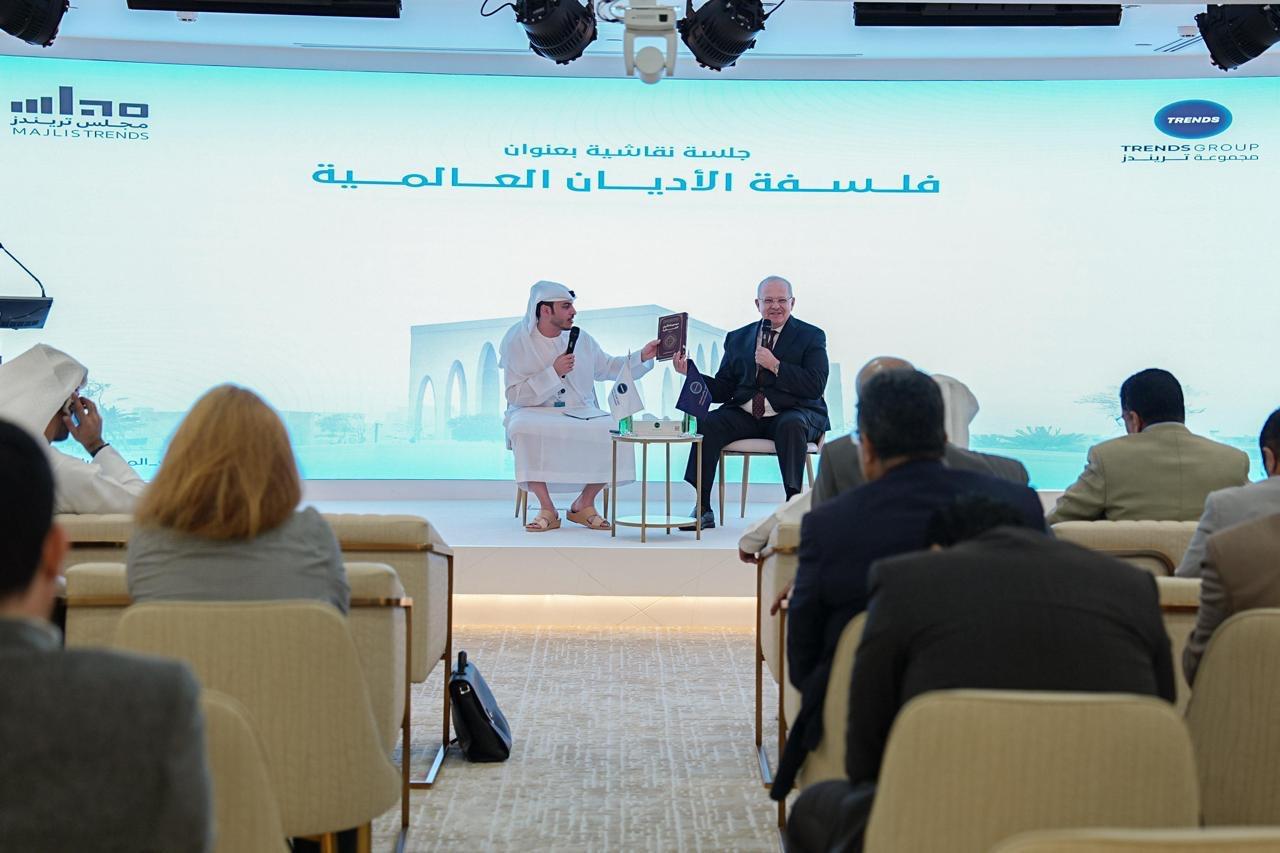
TRENDS Group, through the TRENDS Council, organized a panel discussion titled The Philosophy of World Religions, bringing together researchers and specialists to celebrate Arab thinker Dr. Mohamed Othman El-Khosht, member of the Supreme Scientific Council at Mohamed bin Zayed University for Humanities and former President of Cairo University, on winning the Sheikh Zayed Book Award in the“Editing of Arabic Manuscripts” category for his major encyclopedic work Encyclopedia of World Religions. The book has been published in six volumes by the Mohamed bin Zayed University for Humanities.
The session was presented by researcher Rashid Al Zaabi and moderated by Senior Researcher Hamad Al Hosani, Head of the Political Islam Studies Sector at TRENDS.
During the discussion, Dr. El-Khosht explained that his interest in the philosophy of religion began at an early stage, emphasizing that the philosophy of religion is not a stance against faith, but an attempt to reflect on the profound questions raised by religion through a calm, critical mindset, free from fanaticism or preconceived rejection. He distinguished between studying religion from within faith — based on spiritual certainty and belief — and studying it philosophically through rational inquiry and systematic analysis of religious doctrines.
Dr. El-Khosht also highlighted the major commonalities among religions, noting that nearly all religions raise the eternal human question: “Why are we here?” and provide answers that transcend the material world, whether through the concept of God, Brahman, Nirvana, or “the Way,” reflecting humanity’s rejection of the idea that life is merely a meaningless coincidence.

He added that religions also share common ethical foundations, approaches to human suffering, connections to the sacred through symbols and rituals, and belief in life after death — whether through resurrection, reincarnation, immortality of the soul, or dissolution into Nirvana — stressing that most religions reject the notion that death marks the end of the human story.
Dr. El-Khosht stressed that religious differences do not inevitably lead to conflict, explaining that ignorance of the “other” breeds fear and extremism. At the same time, genuine knowledge and understanding represent the first step toward transforming fear into dialogue, coexistence, and greater mutual understanding.
In this context, he referred to the experience of Islamic Andalusia, where intellectual interaction among Muslims, Christians, and others contributed to a vibrant civilizational and intellectual movement, only to be followed by the decline of knowledge and the rise of intolerance, leading to the collapse of that unique human model.
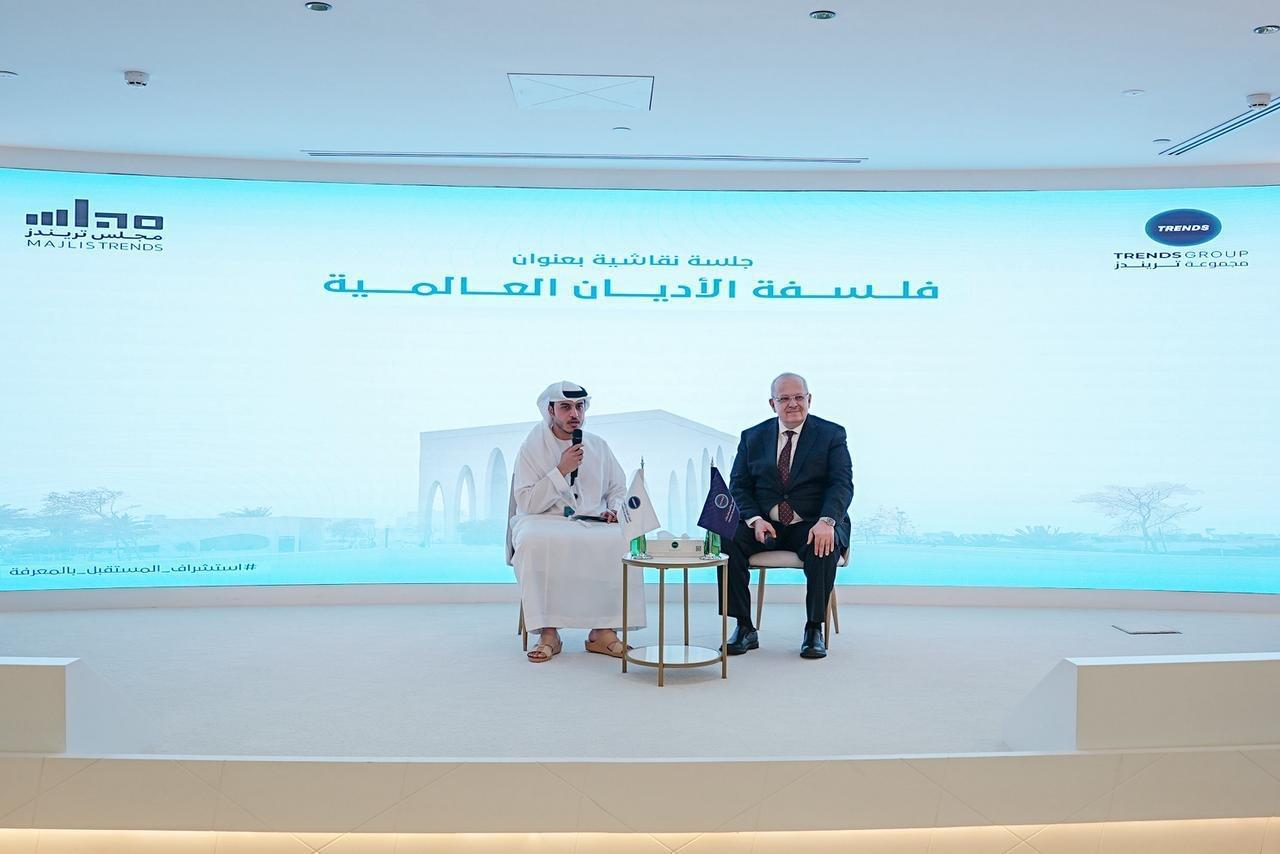
The session concluded with an open discussion focusing on the role of philosophy and comparative religious studies in promoting dialogue among civilizations, building a culture of coexistence, and strengthening mutual understanding in contemporary societies.

