


The study argues that the UAE’s reconsideration of its role within OPEC is a “strategic adaptation” to shifts in the global energy landscape and its evolving economic model.
TRENDS Research & Advisory, a member of the TRENDS Group, has released a new strategic study titled Recalibrating Energy Sovereignty: Strategic Rationale for a UAE Exit from OPEC and OPEC+ in a Fragmenting Global Energy Order.
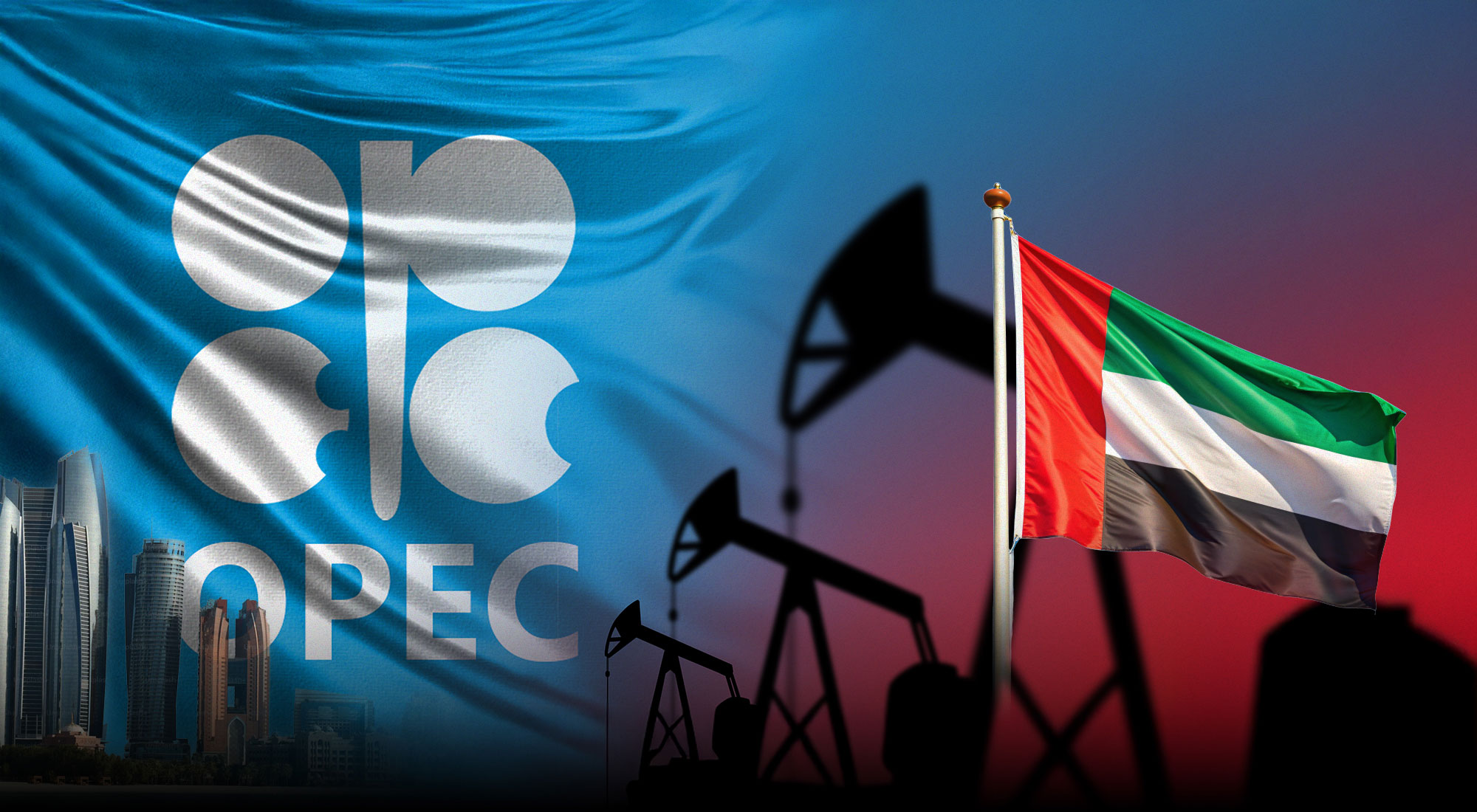
The study, authored by Dr. Guillaume Vermeylen, Associate Professor at the University of Mons, Belgium, through TRENDS’ virtual office in Belgium, argues that the United Arab Emirates’ reconsideration of its role within the Organization of the Petroleum Exporting Countries (OPEC) and the expanded alliance (OPEC+) does not constitute a withdrawal from international cooperation. Instead, it is a “strategic adaptation” to profound shifts in the global energy landscape and the state’s evolving economic model.
 Three Primary Drivers
The study identifies three core factors driving this strategic direction:
Production Quota Constraints: The study suggests that the quota system has become an economic burden, limiting the ambitions of the Abu Dhabi National Oil Company (ADNOC), which has invested billions of dollars to increase its production capacity to approximately 5 million barrels per day.
Divergence in National Interests: This is evidenced by a growing gap between the strategies of the cartel’s members, as the UAE possesses the advantage of “low-cost” production, which incentivizes it to expand its market share rather than restricting supply to support prices.
Accelerating Energy Transition: This shift has necessitated efficiently monetizing hydrocarbon resources before a structural decline in global demand, to support the state’s investments in renewable energy, hydrogen, and petrochemicals.
Autonomy and Geopolitics
The study points out that stepping away from the OPEC+ umbrella would grant the UAE greater political and geopolitical flexibility, allowing it to balance its relations with major global powers (such as the United States and China) away from the pressures of blocs that may be influenced by complex political files. It also affirmed that the UAE’s reputation as a reliable and technologically advanced supplier will enable it to maintain market stability and attract long-term investments independently.
Vision 2030 and the Post-Oil Era
Prof. Vermeylen concludes that this move aligns perfectly with UAE Vision 2030, which aims to build a knowledge-based economy and reduce reliance on oil price volatility. The study clarifies that “energy sovereignty” in the modern era depends on the capacity for innovation and rapid response to market variables, rather than a commitment to rigid institutional structures.
The study concludes by affirming that the UAE model offers lessons for other exporting countries on the importance of “flexibility,” “diversification,” and “autonomy” within a multipolar global system undergoing a radical transformation in energy production and consumption.
Three Primary Drivers
The study identifies three core factors driving this strategic direction:
Production Quota Constraints: The study suggests that the quota system has become an economic burden, limiting the ambitions of the Abu Dhabi National Oil Company (ADNOC), which has invested billions of dollars to increase its production capacity to approximately 5 million barrels per day.
Divergence in National Interests: This is evidenced by a growing gap between the strategies of the cartel’s members, as the UAE possesses the advantage of “low-cost” production, which incentivizes it to expand its market share rather than restricting supply to support prices.
Accelerating Energy Transition: This shift has necessitated efficiently monetizing hydrocarbon resources before a structural decline in global demand, to support the state’s investments in renewable energy, hydrogen, and petrochemicals.
Autonomy and Geopolitics
The study points out that stepping away from the OPEC+ umbrella would grant the UAE greater political and geopolitical flexibility, allowing it to balance its relations with major global powers (such as the United States and China) away from the pressures of blocs that may be influenced by complex political files. It also affirmed that the UAE’s reputation as a reliable and technologically advanced supplier will enable it to maintain market stability and attract long-term investments independently.
Vision 2030 and the Post-Oil Era
Prof. Vermeylen concludes that this move aligns perfectly with UAE Vision 2030, which aims to build a knowledge-based economy and reduce reliance on oil price volatility. The study clarifies that “energy sovereignty” in the modern era depends on the capacity for innovation and rapid response to market variables, rather than a commitment to rigid institutional structures.
The study concludes by affirming that the UAE model offers lessons for other exporting countries on the importance of “flexibility,” “diversification,” and “autonomy” within a multipolar global system undergoing a radical transformation in energy production and consumption.
Three Primary Drivers
The study identifies three core factors driving this strategic direction:
Production Quota Constraints: The study suggests that the quota system has become an economic burden, limiting the ambitions of the Abu Dhabi National Oil Company (ADNOC), which has invested billions of dollars to increase its production capacity to approximately 5 million barrels per day.
Divergence in National Interests: This is evidenced by a growing gap between the strategies of the cartel’s members, as the UAE possesses the advantage of “low-cost” production, which incentivizes it to expand its market share rather than restricting supply to support prices.
Accelerating Energy Transition: This shift has necessitated efficiently monetizing hydrocarbon resources before a structural decline in global demand, to support the state’s investments in renewable energy, hydrogen, and petrochemicals.
Autonomy and Geopolitics
The study points out that stepping away from the OPEC+ umbrella would grant the UAE greater political and geopolitical flexibility, allowing it to balance its relations with major global powers (such as the United States and China) away from the pressures of blocs that may be influenced by complex political files. It also affirmed that the UAE’s reputation as a reliable and technologically advanced supplier will enable it to maintain market stability and attract long-term investments independently.
Vision 2030 and the Post-Oil Era
Prof. Vermeylen concludes that this move aligns perfectly with UAE Vision 2030, which aims to build a knowledge-based economy and reduce reliance on oil price volatility. The study clarifies that “energy sovereignty” in the modern era depends on the capacity for innovation and rapid response to market variables, rather than a commitment to rigid institutional structures.
The study concludes by affirming that the UAE model offers lessons for other exporting countries on the importance of “flexibility,” “diversification,” and “autonomy” within a multipolar global system undergoing a radical transformation in energy production and consumption.
